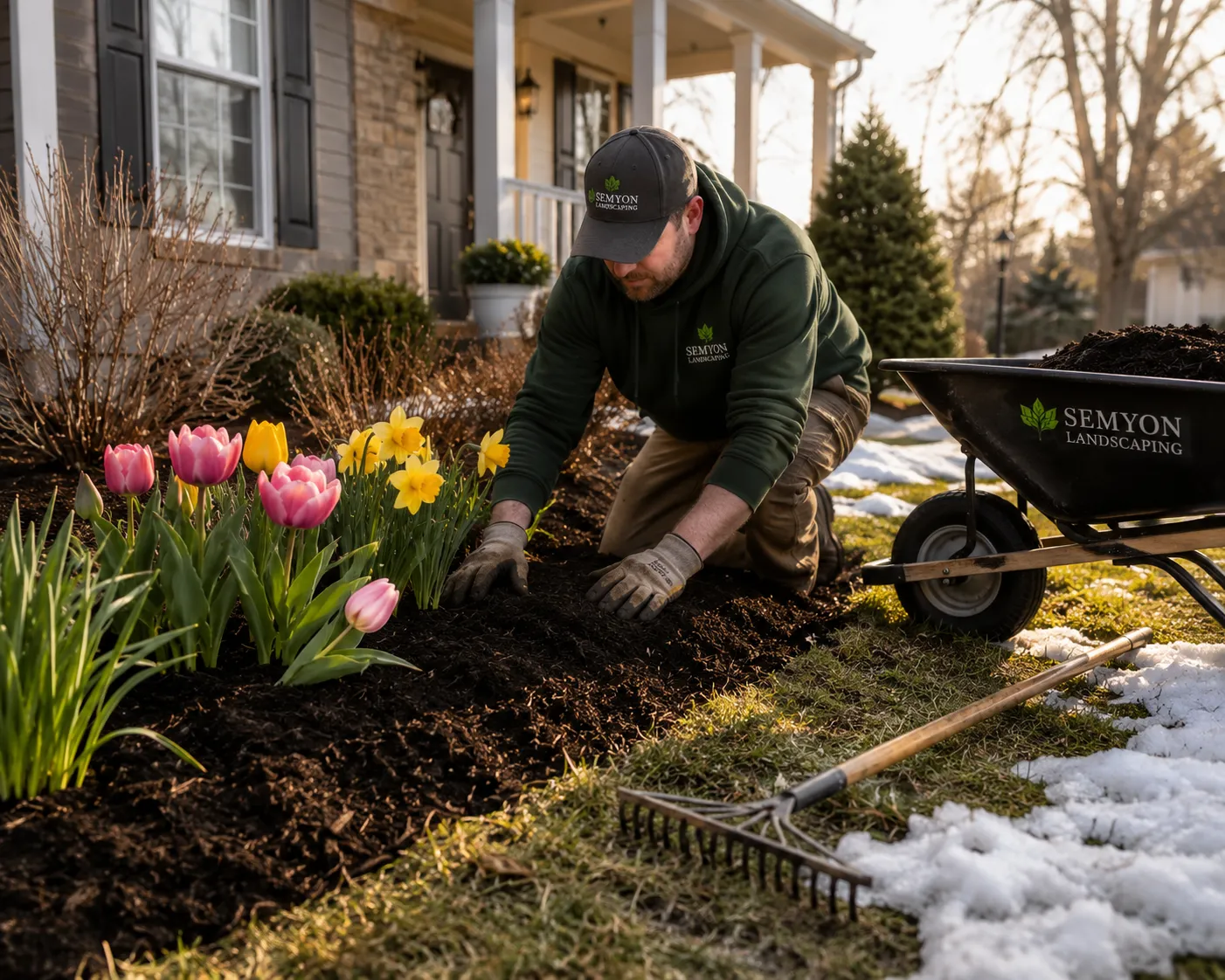
The first warm week in March always brings the same rush of calls. Everyone wants their yard looking sharp at once, and the truth is, spring landscaping in Pennsylvania has a real order of operations. Skip a step, and you end up fertilizing a lawn that isn't ready, or planting before the last frost has actually passed.
After years of managing spring cleanups across Moosic, Scranton, and the rest of Northeastern Pennsylvania, we've built this into a checklist that actually works with our specific climate, not a generic gardening calendar written for a warmer zone.
Start With a Full Cleanup
Clear Winter Debris First
Before anything else, clear fallen branches, matted leaves, and any debris left behind by winter storms or snow removal work. Matted leaves left on the lawn through winter can smother grass and create the perfect environment for fungal disease.
Cut Back Dead Perennials
Many perennials are left standing through winter for structure and wildlife interest, but once new growth starts emerging at the base, it's time to cut back last year's dead stems.
Rake, Don't Just Blow
A light raking of the lawn in early spring helps lift matted grass and improves airflow to the soil, giving new growth room to establish.
Check Beds for Winter Damage
Take a walk through garden beds looking for heaved plants — perennials that were pushed partially out of the soil by repeated freeze-thaw cycles. Gently pressing them back into place before active growth begins prevents root damage and dieback.
Clean Out Gutters and Drainage Areas
Winter debris often clogs gutters and drainage channels, which can lead to water pooling near the foundation or in low spots across the yard once spring rains arrive. Clearing these areas early prevents drainage problems before they start.
Prune Before Buds Break
Timing Is Everything
Most trees and shrubs should be pruned while they're still dormant, before buds break for the season. Pruning too late can reduce flowering on spring-blooming shrubs like lilac and forsythia.
What to Prune Now
Remove any branches damaged by winter ice or snow load, thin out crossing branches for better airflow, and shape shrubs before their spring growth spurt begins.
What to Leave Alone
Spring-flowering shrubs are the exception — prune those right after they bloom, not before, or you'll cut off this year's flowers.
Tools Matter as Much as Timing
Clean, sharp pruning tools make cleaner cuts that heal faster and reduce the risk of introducing disease into the plant. Dull or dirty blades can crush stems instead of cutting them, leaving wounds that take longer to close.
Don't Over-Prune in One Season
Removing more than about a quarter of a shrub's total growth in a single pruning session can stress the plant and delay recovery. When a shrub needs significant reshaping, spreading the work across two seasons is often the safer approach.
Refresh Your Mulch
Why Spring Is the Ideal Mulch Window
A fresh layer of mulch in spring locks in soil moisture right as plants enter their most active growth period, while also suppressing the first wave of weed seeds before they germinate.
Don't Just Pile It On
Old mulch that's compacted or matted should be loosened or partially removed first. Piling fresh mulch directly against tree trunks or plant stems — the "mulch volcano" mistake — traps moisture against bark and invites rot.
Two to Three Inches Is the Sweet Spot
More isn't better. A two to three inch layer provides all the moisture retention and weed suppression benefits without smothering plant roots.
Choosing Between Mulch Types
Dyed hardwood mulch holds its color through the season, while natural double-shredded mulch breaks down faster and feeds organic matter back into the soil. Neither option is wrong — it depends on whether you're after a polished, consistent look or a more natural appearance that improves soil over time.
Test and Prepare Your Soil
Why Guessing Costs You Money
A simple soil test tells you your pH and nutrient levels before you spend money on fertilizer your soil might not even need. Pennsylvania soil often runs slightly acidic, and correcting pH with lime, when needed, makes every other input more effective.
Loosen Compacted Areas
Winter freeze-thaw cycles compact soil, particularly in high-traffic areas. Working compost or aged organic matter into garden beds before planting improves structure and drainage.
Reading the Soil Test Results
A basic soil test typically reports pH along with levels of nitrogen, phosphorus, and potassium. Rather than guessing which nutrients your soil is missing, the results point directly to what your fertilizer program actually needs to address this season.
Time Your Planting Around the Last Frost
Know Your Frost Date
Northeastern Pennsylvania typically sees its last frost in early-to-mid May, though it varies by exact location and elevation. Planting tender annuals or vegetables before this date risks losing everything to a late cold snap.
What Can Go in Earlier
Cold-hardy plants, trees, and shrubs can often be planted several weeks before the last frost date, since they're built to handle cooler soil temperatures.
Hold Off on Tender Plants
Save heat-loving annuals and vegetable transplants until the danger of frost has clearly passed, even if a warm stretch tempts you earlier.
Hardening Off New Plants
Plants started indoors or purchased from a greenhouse need a gradual transition to outdoor conditions before permanent planting. A week of increasing outdoor exposure, starting with a few hours in a sheltered spot, helps prevent transplant shock once they go into the ground.
Get Your Irrigation System Running Again
Check Before You Need It
If you have an irrigation system, spring is the time to check for winter damage — cracked heads, disconnected lines, or issues from ground movement during freeze-thaw cycles.
Run a Full Test Cycle
Turn the system on and walk the entire property, checking that every zone covers its intended area without gaps or overspray onto hardscaping.
Adjust for the Season
Early spring rainfall in Pennsylvania often means irrigation isn't needed yet at all — save the water and adjust your schedule once natural rainfall tapers off.
Check Controller Settings
Irrigation timers often need reprogramming after winter, since power interruptions or battery changes can reset schedules. Confirming the controller reflects your actual watering needs prevents both wasted water and under-watered plants early in the season.
Fertilize at the Right Moment
Wait for Active Growth
Fertilizing too early, while grass and plants are still mostly dormant, wastes product and can even encourage weak, premature growth. Wait until you see consistent green-up before applying.
Lawn and Beds Have Different Needs
Lawns typically benefit from a nitrogen-focused spring fertilizer, while garden beds often do better with a balanced, slower-release formula that won't push overly fast, weak growth in ornamental plants.
Reading Your Lawn's Signals
A lawn that greens up slowly and evenly on its own often needs less fertilizer intervention than one that stayed patchy through winter. Watching how the lawn responds naturally to warming temperatures before applying product helps avoid unnecessary feeding.
Address Winter Damage to Hardscaping
Inspect Patios and Walkways
Freeze-thaw cycles can shift pavers, crack mortar joints, and heave sections of walkway. Spring is the time to catch these issues before they worsen through another season of use.
Check Retaining Walls
Look for any leaning, bulging, or shifted stones in retaining walls, which can indicate drainage problems that need addressing before they become structural issues.
Look at Fences and Structures Too
Fence posts and other structures can shift slightly from frost heave over winter. A quick check in spring, before growth hides these issues under new foliage, makes repairs easier to spot and address.
Plan for What's Ahead, Not Just What's Now
This Is the Time to Book Ahead
Landscaping companies get busy fast once the weather turns, and popular spring projects — mulch installs, planting, hardscaping additions — book up quickly. If you're planning bigger changes this year, early spring is the time to get on the schedule.
Think Beyond the Season
A quick walk of your property with a professional in early spring can flag issues — drainage, dying trees, overgrown beds — well before they become bigger, more expensive problems later in the year.
Budgeting for the Season Ahead
Spring is also the right time to think through the season's full landscaping budget, from routine mulch and mowing to any larger hardscaping or planting projects. Spreading planned work across spring and early summer, rather than trying to fit everything into a single busy month, generally leads to better results and less scheduling pressure on both sides.
FAQ: Spring Landscaping in Pennsylvania
When should I start spring cleanup in Pennsylvania? As soon as the ground has thawed and snow has fully melted, typically late March in most of Northeastern PA.
When is the last frost date in Northeastern Pennsylvania? Generally early-to-mid May, though it can vary by specific location and elevation within the region.
Should I fertilize my lawn right away in spring? Wait until grass shows consistent active growth rather than fertilizing the moment temperatures rise.
How much mulch do I need for spring refresh? Aim for a two to three inch layer across garden beds, avoiding direct contact with plant stems and tree trunks.
When should I prune my shrubs in spring? Prune most shrubs while still dormant, before buds break — except for spring-flowering varieties, which should be pruned right after they bloom.
Is it too early to plant vegetables in April? For most of Northeastern PA, yes — wait until after the last frost date in early-to-mid May for tender vegetable transplants.
How do I know if my soil needs lime? A soil test is the only reliable way to know; Pennsylvania soil often runs acidic, but the exact adjustment needed varies by property.
What should I check on my irrigation system in spring? Look for winter damage to heads and lines, then run a full test cycle to confirm even coverage before you rely on it for the season.
Can winter damage my patio or retaining wall? Yes — freeze-thaw cycles can shift pavers, crack mortar, and destabilize retaining walls, all of which are easier to fix early.
Do you handle spring cleanups outside of Moosic? Yes — we provide spring landscaping services throughout Scranton, Dunmore, Clarks Summit, Old Forge, Taylor, Pittston, Moscow, Wilkes-Barre, Kingston, Dickson City, and South Abington Township.
Conclusion
Spring landscaping in Pennsylvania rewards homeowners who follow the right order: cleanup first, then pruning, mulch, soil prep, and planting timed around the last frost. Get the sequence right, and the rest of the season is a lot less work.
Ready for a Head Start This Spring?
Semyon Landscaping handles spring cleanups, pruning, mulching, and planting throughout Moosic and Northeastern Pennsylvania. Contact us for a free estimate before the spring rush books up your project.