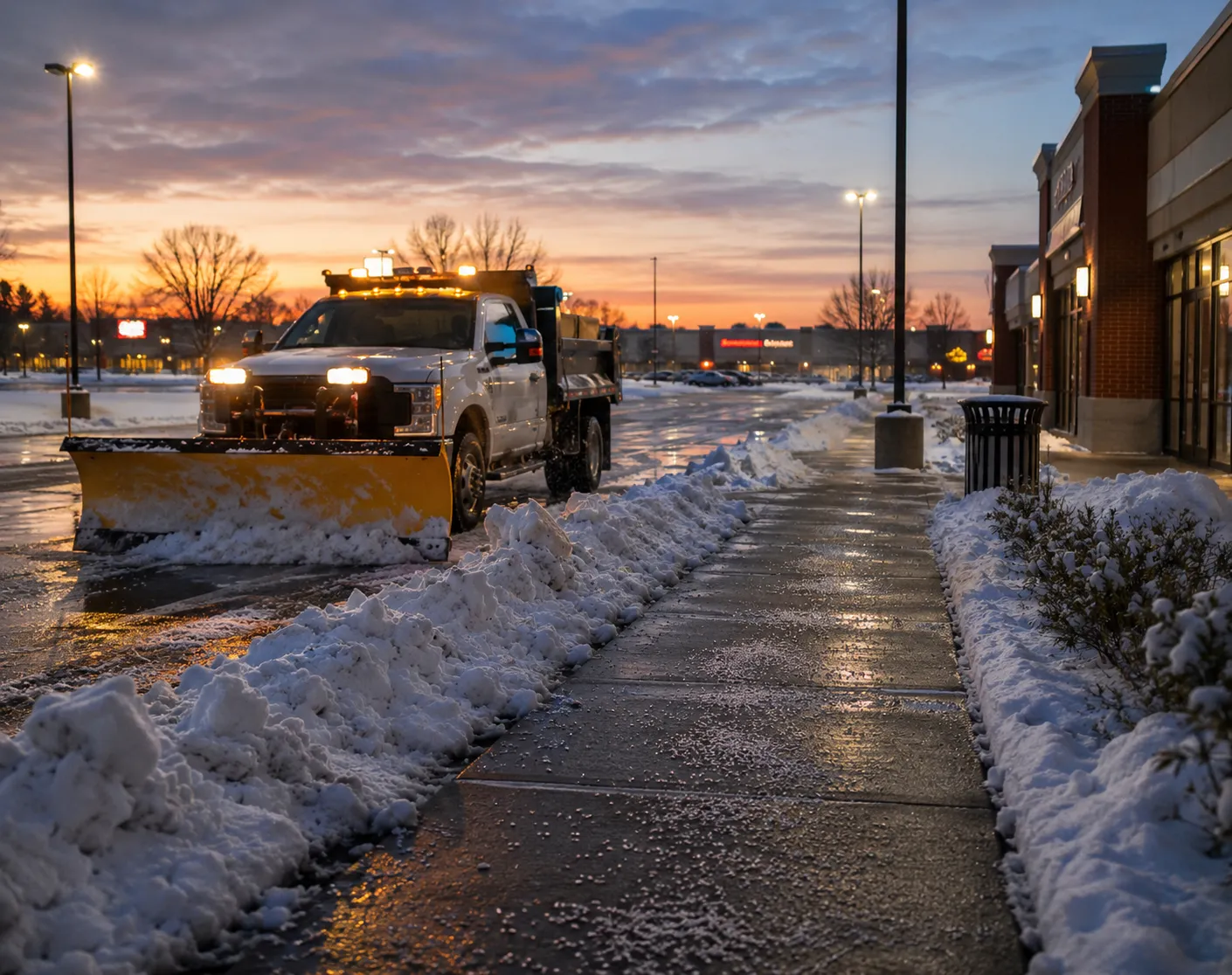
Every winter, we get calls the morning after a storm from property owners who thought they could handle it themselves — until a slip-and-fall happened in the parking lot, or three days of ice built up on a walkway nobody got to in time.
Snow removal isn't just about convenience. For homeowners, it's about safety and preventing damage to your property. For businesses, it's about liability, customer safety, and keeping operations running. Here's what actually goes into doing it right in Northeastern Pennsylvania, where winters are long and storms don't wait for a convenient time.
The Real Liability Risk of Untreated Snow and Ice
It's Not Just an Inconvenience
An untreated walkway or parking lot isn't just an annoyance — it's a liability. Slip-and-fall injuries on snow and ice are among the most common premises liability claims property owners face every winter.
Homeowners Are Liable Too
Many homeowners don't realize that municipalities in Northeastern Pennsylvania often require snow and ice removal from sidewalks within a set timeframe after a storm. If someone is injured on an uncleared sidewalk in front of your home, you can be held responsible.
For Businesses, the Stakes Are Higher
Commercial property owners face a much larger volume of foot traffic, which multiplies the risk. A single unaddressed icy patch in a parking lot can result in a claim that costs far more than an entire season of professional snow removal.
Insurance Considerations
Some insurance policies factor in whether a property has a documented, professional snow removal plan in place. Having a signed service agreement and a record of when service was performed after each storm can matter if a claim is ever filed.
Residential Snow Removal: More Than Just the Driveway
Full-Property Coverage
Professional residential snow removal typically covers driveways, walkways, front steps, and sometimes designated parking areas — not just a quick pass with a plow blade down the middle of the driveway.
Protecting What's Underneath
Improper snow removal — scraping too aggressively or piling snow on plants and lawn areas — can damage landscaping, driveways, and walkway surfaces. Experienced crews know how to clear snow without damaging what's underneath.
Consistency Matters
A single storm response doesn't cut it for a Pennsylvania winter. Consistent, scheduled service throughout the season means your property is handled the same way after every storm, not just when you remember to call.
Handling Multiple Storm Types
Wet, heavy snow requires different equipment and technique than light powder, and freezing rain events need an entirely different response involving ice treatment before and after the fact. An experienced crew adjusts its approach to the specific storm rather than treating every event the same way.
Commercial Snow Removal: A Different Level of Responsibility
Businesses Can't Afford to Close
A parking lot or entrance that isn't cleared quickly means lost customers, delayed employees, and potential liability all at once. Commercial snow removal needs to happen fast, often before regular business hours even begin.
Scale Changes the Approach
Commercial properties need equipment and crews capable of clearing large lots, loading docks, and multiple entrances efficiently — a very different operation than residential driveway service.
Contracts Built Around Your Hours
A well-run commercial snow removal plan is built around your business hours, not a generic schedule — making sure lots and walkways are clear before employees and customers arrive, regardless of when a storm hits overnight.
Multiple Property Types Need Different Plans
A retail strip mall, a medical office, and a warehouse with loading docks all have different priority areas and traffic patterns. A commercial snow removal plan should reflect how each specific property actually operates, rather than applying a one-size-fits-all approach across every client.
Ice Management: The Part Homeowners Underestimate
Snow Isn't the Only Problem
Snow is visible and obvious. Ice, especially the thin, clear "black ice" that forms after a partial melt and refreeze, is often invisible until someone is already falling.
Proactive Ice Management
Pre-treating walkways and lots with de-icing materials before a storm, rather than reacting after ice has already formed, is the more effective — and safer — approach.
Choosing the Right De-Icer
Not all ice melt products are equal. Some can damage concrete, harm nearby plants, or track salt residue indoors. The right product for the surface and situation matters more than just grabbing whatever's available.
Temperature Affects Product Choice
Standard rock salt loses effectiveness well before temperatures drop into the single digits, which are common during Northeastern Pennsylvania cold snaps. Professional crews carry a range of products rated for different temperature thresholds, so walkways stay treated even during the coldest stretches of winter.
Sidewalks and Walkways: Where Most Accidents Happen
Foot Traffic Means Higher Risk
Cars can navigate around a patch of ice; pedestrians often can't see it until they're already on it. Sidewalks and walkways are consistently where the highest number of winter slip-and-fall incidents occur.
Municipal Requirements
Many towns in this region require sidewalks to be cleared within a specific window after snowfall stops — often 12 to 24 hours. Missing that window can result in fines in addition to liability exposure.
Consistency Across the Whole Path
A partially cleared walkway is often more dangerous than an obviously snow-covered one, since people assume a cleared path is safe and may not watch their footing on the sections that were missed.
Steps and Ramps Need Extra Attention
Stairs and ramps accumulate ice differently than flat walkways and often refreeze faster due to how water drains across them. These areas typically need more frequent treatment throughout a storm than the surrounding flat sections of a property.
Parking Lots: Why Timing Matters as Much as the Plow
Early Morning Response
For commercial properties, snow that falls overnight needs to be cleared before the first employees and customers arrive — which often means plowing crews are out well before sunrise.
Ongoing Storm Management
Longer storms sometimes require multiple passes throughout the day, rather than a single clearing, to keep accumulation from becoming unmanageable by the time the storm ends.
Snow Storage Matters Too
Where cleared snow gets piled matters — blocking sightlines at exits, covering drains, or piling against buildings can all create secondary problems if not planned properly.
How Snow Removal Protects Your Landscaping Investment
Salt Damage Is Real
Excessive or improperly applied salt and de-icing products can damage lawns, shrubs, and trees near walkways and driveways, sometimes not showing symptoms until spring.
Plow Damage to Beds and Lawn Edges
Aggressive or careless plowing can scrape lawn edges, damage mulch beds, and even harm shrubs planted too close to cleared areas. Crews familiar with your property's landscaping layout are less likely to cause this kind of damage.
One Team, Consistent Care
Working with a company that handles both your landscaping and snow removal means the people clearing your property in winter already know where the beds, irrigation heads, and delicate plantings are.
What to Look for in a Snow Removal Contract
Response Time Guarantees
A solid contract should specify how quickly service begins after snowfall reaches a certain accumulation, not a vague "as soon as possible."
Coverage Details
Make sure driveways, walkways, steps, and any designated areas are explicitly covered — assumptions lead to gaps in service exactly when you need it most.
Ice Management Included
Confirm whether de-icing is included or billed separately, since ice management is often just as important as the plowing itself.
Understand the Trigger Depth
Many snow removal contracts specify a "trigger" — a snowfall accumulation amount that automatically initiates service, such as two inches. Knowing your contract's trigger depth helps set realistic expectations for when crews will arrive after a storm begins.
Preparing Your Property Before the First Storm
Get on the Schedule Early
Snow removal companies fill up their service routes before the first major storm of the season. Waiting until snow is already falling to look for service often means you're out of luck.
Mark Hazards in Advance
Flagging the edges of walkways, delicate plants near cleared areas, and any uneven surfaces before winter helps crews avoid damage and work more efficiently.
FAQ: Snow Removal in Moosic, PA
How quickly should snow be removed after a storm? Most municipalities in the region expect sidewalks cleared within 12 to 24 hours after snowfall stops; commercial lots typically need clearing before business hours resume.
Am I liable if someone slips on my property? In many cases, yes — property owners can be held responsible for injuries caused by uncleared snow or ice, particularly on sidewalks and walkways.
What's the difference between residential and commercial snow removal? Residential service typically covers driveways and walkways for a single property; commercial service handles larger lots, multiple entrances, and stricter timing around business hours.
Does snow removal include ice management? It depends on the contract — always confirm whether de-icing treatment is included or offered as a separate service.
Can plowing damage my lawn or landscaping? Yes, careless plowing can scrape lawn edges and damage plants near cleared areas, which is why experienced crews familiar with your property matter.
How do I know if I need a snow removal contract or one-time service? If you experience regular snowfall throughout the season, a seasonal contract typically provides more consistent, faster response than calling for one-time service after each storm.
What de-icing products are safe for my landscaping? Certain de-icers are less damaging to concrete, grass, and nearby plants than standard rock salt — a professional crew can recommend the right product for your property.
Does commercial snow removal cover parking lots and sidewalks both? Typically yes, though coverage should be clearly outlined in your service agreement rather than assumed.
When should I sign up for snow removal services? Before the first major storm of the season — providers' routes fill up quickly once winter weather begins.
Do you provide snow removal outside of Moosic? Yes — we provide residential and commercial snow removal throughout Scranton, Dunmore, Clarks Summit, Old Forge, Taylor, Pittston, Moscow, Wilkes-Barre, Kingston, Dickson City, and South Abington Township.
Conclusion
Snow removal is easy to underestimate until a slip-and-fall, a damaged walkway, or an unhappy customer makes the cost of skipping it obvious. Whether it's a home or a business, consistent, professional snow and ice management protects people, property, and your bottom line all winter long.
Get Ahead of This Winter
Semyon Landscaping provides residential and commercial snow removal throughout Moosic and Northeastern Pennsylvania. Contact us for a free estimate and get on the schedule before the first storm hits.