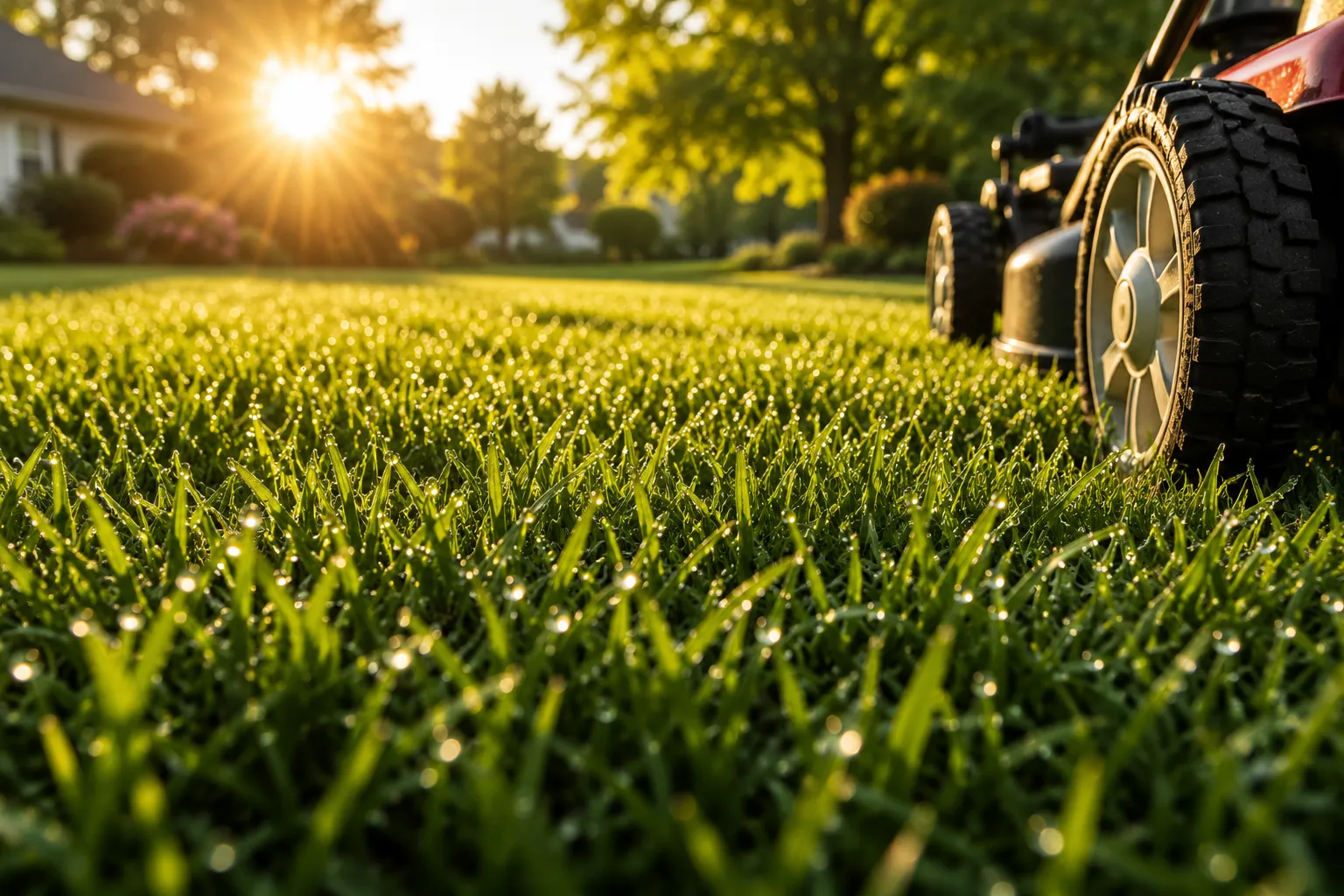
Every spring, we get the same call: "My lawn looked fine last fall — what happened?" Usually, the answer isn't one big mistake. It's a handful of small things that add up over a season: mowing too short, watering at the wrong time, skipping aeration, or fertilizing on the wrong schedule for our climate.
Pennsylvania's mix of humid summers, cold winters, and clay-heavy soil in a lot of Northeastern PA neighborhoods makes lawn care a little more particular than a generic gardening blog will tell you. Here's what actually works for lawns in this region, based on years of lawn maintenance across Moosic, Scranton, and the surrounding area.
Mow at the Right Height (Not Too Short)
Why Short Grass Hurts Your Lawn
Cutting grass too short is one of the most common lawn care mistakes we see. Short grass has less leaf surface for photosynthesis, weaker roots, and far less resistance to weeds and drought.
The Right Height for Pennsylvania Lawns
Most cool-season grasses common in this region — Kentucky bluegrass, tall fescue, and perennial ryegrass — do best mowed to about 3 to 3.5 inches. Taller grass shades out weed seeds and holds moisture better through summer heat.
The One-Third Rule
Never cut more than one-third of the grass blade at a time. If your lawn gets away from you, mow it down gradually over a few sessions instead of scalping it in one pass.
Keep Your Mower Blade Sharp
A dull mower blade tears grass instead of cutting it cleanly, leaving ragged, brownish tips that make an otherwise healthy lawn look stressed from a distance. Sharpening the blade once or twice a season is a small maintenance step that has an outsized effect on how green the lawn looks day to day.
Vary Your Mowing Pattern
Mowing the same direction every time gradually compacts soil in the same wheel tracks and can encourage grass to lean in one direction. Alternating mowing patterns week to week keeps growth more upright and reduces soil compaction over the season.
Water Deeply, Not Frequently
Frequent Light Watering Backfires
Daily light watering trains roots to stay shallow, which makes your lawn more vulnerable during dry stretches. It also promotes fungal disease by keeping the surface constantly damp.
The Better Approach
Water deeply once or twice a week, aiming for about an inch of water total, early in the morning. This encourages roots to grow deeper in search of moisture, which builds a more drought-resistant lawn.
Signs You're Overwatering
Mushy patches, a spongy feel underfoot, or visible fungus are all signs to cut back — even during a hot Pennsylvania summer.
The Best Time of Day to Water
Early morning watering, ideally before 10 a.m., gives grass time to dry out over the course of the day, which reduces the risk of fungal disease. Evening watering leaves moisture sitting on the blades overnight, creating exactly the damp conditions fungus needs to take hold.
Adjusting for Rainfall
Pennsylvania summers bring plenty of natural rainfall in most years, so a fixed watering schedule can easily lead to overwatering. Checking rainfall totals for the week and adjusting accordingly saves water and keeps the lawn healthier than watering on autopilot.
Aerate Your Lawn Every Fall
Why Aeration Matters So Much Here
A lot of Northeastern Pennsylvania soil has a heavy clay component, which compacts easily under foot traffic, mowing, and seasonal freeze-thaw cycles. Compacted soil chokes roots and blocks water and nutrients from reaching them.
What Aeration Actually Does
Core aeration pulls small plugs of soil out of the lawn, relieving compaction and letting air, water, and fertilizer reach the root zone directly.
Timing Matters
Early fall is the ideal window for aeration in this climate — the grass is actively growing and can recover quickly before winter dormancy.
Signs Your Lawn Needs Aeration
If water pools on the surface after rain instead of soaking in, or if a screwdriver is difficult to push into the soil more than an inch or two, compaction is likely limiting your lawn's health. High-traffic areas, like along fence lines or near play equipment, often need attention even when the rest of the lawn seems fine.
What to Expect Afterward
A freshly aerated lawn can look a little rough for a week or two, with small soil plugs scattered across the surface. This is normal — the plugs break down naturally with mowing and rainfall, and the lawn typically looks noticeably better within a month.
Overseed Right After Aerating
Why These Two Go Together
Aeration creates the perfect seed-to-soil contact for overseeding. The holes left behind give new grass seed a protected spot to germinate, rather than sitting exposed on compacted surface soil.
Choosing the Right Seed Blend
A cool-season blend suited to Pennsylvania — often a mix of Kentucky bluegrass and turf-type tall fescue — fills in thin patches and improves density heading into winter.
Give It Time
New grass needs consistent moisture for the first few weeks. Light, frequent watering during germination (the one exception to the "water deeply" rule) helps seed establish before you shift back to a normal watering schedule.
Fertilize on a Pennsylvania-Specific Schedule
Timing Beats Quantity
More fertilizer isn't better — timed fertilizer is better. Cool-season lawns in this region benefit most from feeding in early spring and again in early fall, with a lighter feeding possible in late fall to support root development through winter.
Avoid the Summer Feeding Trap
Heavy fertilization during peak summer heat can actually stress your lawn and increase disease risk. Save the bulk of your feeding for spring and fall when grass is actively growing.
Match the Fertilizer to the Season
Spring formulas typically emphasize nitrogen for green-up and growth, while fall formulas often shift toward potassium to strengthen roots before winter.
Slow-Release vs. Quick-Release
Slow-release fertilizers feed the lawn gradually over several weeks, reducing the risk of burning grass and providing more even, sustained growth. Quick-release products act faster but require more careful timing and application to avoid overfeeding.
Don't Fertilize Right Before Heavy Rain
Applying fertilizer right before a major storm risks washing much of it away before the lawn can absorb it — both wasting money and sending excess nutrients into local waterways. Checking the forecast before applying is a simple step that's easy to skip.
Handle Weeds Before They Take Over
Prevention Beats Removal
A pre-emergent herbicide applied in early spring stops crabgrass and other common weeds before they germinate — far easier than fighting an established weed problem in July.
Thick Grass Is Your Best Weed Control
The single best defense against weeds is a dense, healthy lawn that doesn't leave bare soil for weed seeds to take hold in. Proper mowing height, aeration, and overseeding all work toward this same goal.
Spot-Treat, Don't Blanket-Treat
For isolated weed patches, spot treatment is more effective and less disruptive to the surrounding healthy grass than treating the entire lawn.
Common Weeds in Pennsylvania Lawns
Crabgrass, dandelions, clover, and creeping charlie are among the most persistent weeds homeowners deal with in this region. Each responds differently to treatment, and misidentifying a weed often means applying the wrong product and wasting both time and money.
Timing Your Weed Control
Pre-emergent products need to go down before soil temperatures warm enough for weed seeds to germinate, typically in early spring. Post-emergent treatments for existing weeds work best when weeds are actively growing, rather than during summer dormancy or drought stress.
Know Your Soil
Why a Soil Test Matters
Guessing at your lawn's needs wastes money and can even hurt your grass. A basic soil test tells you your pH level and nutrient deficiencies, which should drive your fertilization plan rather than a one-size-fits-all bag from the store.
Pennsylvania Soil Tends Toward Acidic
Many lawns in this region run slightly acidic, which can limit nutrient uptake even with regular fertilization. Lime applications, guided by a soil test, can correct pH and make your existing fertilizer program more effective.
Deal With Shade Realistically
Grass Under Trees Has Limits
No amount of fertilizer will make grass thrive in deep shade the way it would in full sun. Shade-tolerant seed blends help, but expect thinner growth under mature trees regardless.
Consider Alternatives for Deep Shade Areas
For consistently shaded spots where grass struggles year after year, groundcover plantings or mulched beds often look better — and require less maintenance — than lawn that's fighting a losing battle for light.
Don't Ignore Early Signs of Disease or Pests
Catching Problems Early
Brown patches, unusual textures, or sudden thinning are worth investigating right away. Lawn diseases and grub damage both spread quickly if left untreated, and early intervention is almost always cheaper and less disruptive than waiting.
When to Call a Professional
If a patch problem doesn't respond to basic care within a couple of weeks, it's usually worth having someone experienced take a look before it spreads across the whole yard.
Build a Seasonal Routine You'll Actually Follow
Spring
Pre-emergent weed control, early fertilization, and mowing height adjustments as growth ramps up.
Summer
Consistent mowing at proper height, deep watering, and monitoring for stress or disease during peak heat.
Fall
Aeration, overseeding, and a fall fertilizer application — arguably the most important season for long-term lawn health in this climate.
Winter
Minimal grass activity, but this is the time to plan next year's lawn care schedule and address any drainage issues before spring rains.
FAQ: Lawn Care in Pennsylvania
How often should grass be cut? Weekly during active growth in spring and early summer, tapering to every 10-14 days as growth slows in late summer.
When should I fertilize my Pennsylvania lawn? Early spring and early fall are the two most important windows, with an optional light late-fall feeding for root development.
Do I really need to aerate every year? Most lawns with clay-heavy soil benefit from annual aeration; sandier soils may only need it every two to three years.
What's the best grass seed for Pennsylvania lawns? A blend of Kentucky bluegrass and turf-type tall fescue handles this region's climate and soil conditions well.
Why does my lawn have brown patches? Common causes include grub damage, fungal disease, dog urine spots, or compacted soil — the right fix depends on identifying the actual cause.
Is it bad to mow when the grass is wet? Yes — wet mowing can tear grass blades instead of cutting cleanly and spreads fungal disease more easily.
How much does professional lawn care cost? Costs vary based on lawn size and service frequency; a free estimate is the most accurate way to get pricing for your property.
Can I aerate and overseed myself? It's possible with rented equipment, but professional-grade aerators achieve better soil penetration and more consistent results across the whole lawn.
What causes lawn diseases in Pennsylvania? Humid summers combined with overwatering or poor air circulation create ideal conditions for fungal disease.
Do you offer lawn care outside of Moosic? Yes — we provide lawn maintenance throughout Scranton, Dunmore, Clarks Summit, Old Forge, Taylor, Pittston, Moscow, Wilkes-Barre, Kingston, Dickson City, and South Abington Township.
Conclusion
A green, healthy Pennsylvania lawn isn't about one perfect product — it's about the right actions at the right times of year. Mow at the correct height, water deeply, aerate and overseed every fall, and fertilize on a schedule built for this climate, and most of the common lawn problems in this region simply don't happen.
Want a Lawn That Takes Care of Itself?
Semyon Landscaping provides lawn maintenance throughout Moosic and Northeastern Pennsylvania, built around the specific soil and climate challenges of this region. Contact us for a free estimate and we'll put together a lawn care plan suited to your property.