Every November, we see the same thing: homeowners on ladders in freezing wind, wrestling with tangled strands from a box that's been in the attic since last January. It's not just frustrating — roofline lighting installation is one of the more dangerous DIY home projects, especially once ice starts forming on the roof edge.
Professional Christmas light installation isn't just about convenience, though that's a big part of it. It's about safety, a finished look that actually holds up through the season, and not having to think about it again until the lights come down.
Why Roofline Lighting Is a Safety Concern
Ladders and Ice Don't Mix
Late fall and early winter in Northeastern Pennsylvania often bring the exact conditions that make ladder work dangerous — wet leaves, early frost, and unpredictable wind. Roof and gutter work in these conditions carries real fall risk.
Electrical Safety Matters Too
Improperly connected strands, overloaded outlets, or damaged wiring left exposed to snow and moisture create both fire and shock hazards. Professional installers know how to run and connect lighting safely across an entire property.
Roof Damage Is a Real Risk
Improperly secured clips or staples driven directly into roofing material can cause leaks and damage that isn't obvious until the next heavy rain — long after the lights come down.
Insurance Considerations for DIY Installation
Falls from roofs and ladders during holiday light installation send a notable number of homeowners to the emergency room every year. Beyond the personal injury risk, some homeowner's insurance policies have specific language around liability for injuries to others helping with DIY installation on your property.
What Professional Installation Actually Includes
More Than Just the Roofline
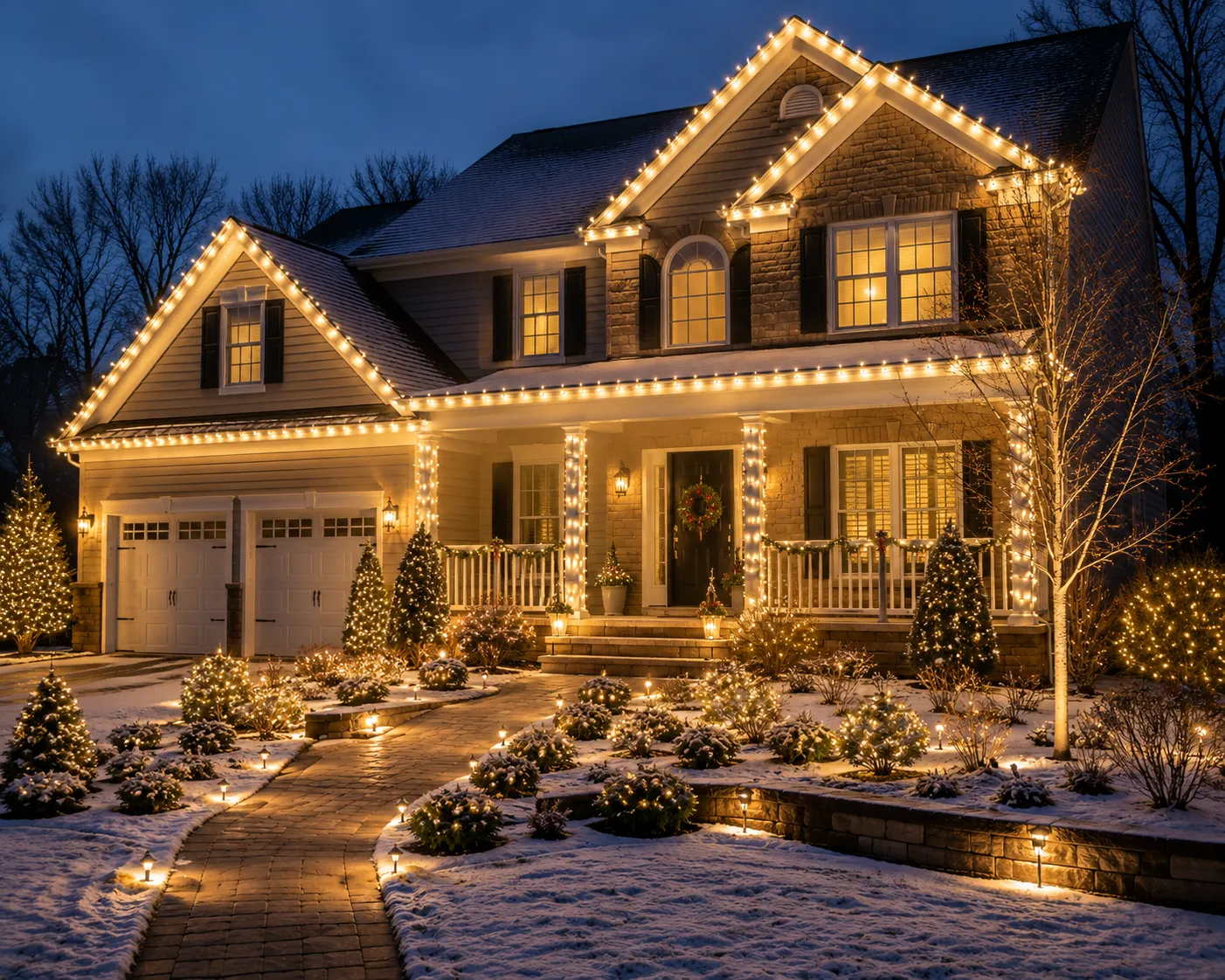
While rooflines get most of the attention, a full professional installation typically covers porch columns, railings, shrubs, trees, and walkway edges — creating a cohesive look across the entire property rather than just one strand along the gutter.
Custom-Fit, Not Generic
Professional installation is measured and fitted to your specific roofline and architecture, avoiding the sagging, uneven look that comes from generic pre-made strands stretched to fit.
Secure, Non-Damaging Attachment
Proper installation uses clips designed not to damage roofing, siding, or gutters — a detail that matters far more once the lights come down and you're left with what's underneath.
Handling Difficult Architecture
Steep rooflines, tall peaks, and multi-story sections of a home present challenges that go beyond what a typical homeowner's ladder and equipment can safely handle. Professional crews come equipped for these more difficult sections, ensuring the entire roofline gets consistent coverage rather than skipping the hardest-to-reach areas.
Choosing the Right Lights for Your Home
Warm White vs. Multicolor
Warm white lighting has become the more popular choice for a classic, elegant look, while multicolor remains a traditional favorite for a more festive, playful appearance. The right choice depends on your home's architecture and personal style.
LED vs. Traditional Bulbs
LED lighting uses significantly less energy, generates less heat, and lasts longer than traditional incandescent strands — an easy upgrade for anyone doing a fresh installation.
Matching Lights to Architecture
Larger homes with strong architectural lines often look best with clean, single-color roofline lighting, while homes with more traditional detailing can carry multicolor and varied accent lighting well.
Accent Lighting for Trees and Landscaping
Wrapping mature trees, porch columns, and foundation shrubs in lighting adds depth to a display beyond just the roofline, creating a more layered look across the whole property rather than a single flat line of light along the gutter.
Timing Your Installation Right
Before the Ground Freezes
Scheduling installation before the first hard freeze makes the work easier and safer, and avoids installers working around ice on the roof or frozen ground for stake-mounted ground lighting.
Popular Windows Book Up Fast
Early-to-mid November is typically the busiest window for professional installers, since most homeowners want their lighting up around the same time. Booking early secures a spot before the calendar fills.
Give Yourself Time to Enjoy It
Installing early means the lights are ready well before the holidays actually arrive, rather than scrambling to get everything up the week before Christmas.
Weather Windows Can Close Quickly
Northeastern Pennsylvania can see an early cold snap or snowfall well before winter officially begins, which can shut down installation work for days or weeks at a time. Scheduling early gives some buffer against an unpredictable early-season storm derailing your plans entirely.
Maintenance Through the Season
Bulbs Do Fail
Even quality LED strands can experience the occasional failed bulb or section over a multi-week display period. Many professional installation services include a maintenance visit or quick-response repair if something goes out mid-season.
Weather Takes a Toll
Wind, snow, and ice all put stress on outdoor lighting installations. Periodic checks ensure everything stays securely attached and functional throughout the display period.
Quick Response Matters
A single dark section on an otherwise well-lit roofline stands out immediately, especially at night. Services that offer prompt repair visits during the display season help keep the display looking complete throughout the weeks it's up, rather than degrading visibly as the season goes on.
Safe, Timely Removal
Removal Is Its Own Job
Just as installation requires ladder work in cold conditions, so does removal — often in worse weather than installation, since it typically happens in January.
Avoiding Damage on the Way Down
Careful removal protects roofing, gutters, and siding just as much as careful installation does. Rushed removal is where a lot of accidental damage happens.
Timing Removal Appropriately
Most homeowners prefer lights down within the first few weeks of January, after the holiday season has clearly wrapped up but before the display starts feeling out of place.
Cold Weather Complicates Removal
Frozen clips, ice-coated strands, and slippery rooflines can make January removal even more hazardous than the original installation in November. This is exactly why professional removal, handled by crews equipped for winter conditions, matters as much as the initial install.
Storage That Protects Your Investment
Tangled Strands Shorten Lifespan
Lights thrown into a box in a tangled mass are far more likely to develop damaged wiring and burnt-out sections by the following year. Proper winding and storage significantly extends the useful life of a lighting investment.
Labeled, Organized Storage
Professional installation services often include organized storage — strands labeled by section of the house — making next year's installation faster and reducing the guesswork of untangling everything from scratch.
Protecting Against Moisture and Pests
Proper storage containers protect lighting from moisture damage and pest issues that can occur in basements, attics, or garages over the off-season.
Extending the Life of Your Investment
Quality LED lighting can last many seasons when stored properly, making the storage step just as important financially as the installation and removal itself. Homeowners who invest in good storage practices often find their lighting still performs well after several years, rather than needing partial replacement each season.
Commercial Holiday Lighting Considerations
Scale and Visibility
Commercial properties often want more visible, larger-scale displays to draw attention from the road, which requires different equipment and planning than residential rooflines.
Timing Around Business Operations
Installation and removal need to work around business hours, parking lot usage, and customer safety — similar considerations to commercial snow removal scheduling.
Consistent Brand Presentation
For retail and customer-facing businesses, holiday lighting is an extension of brand presentation during the season's highest-traffic shopping period.
Coordinating With Existing Signage and Decor
Commercial holiday lighting often needs to work alongside existing signage, architectural lighting, and seasonal displays already in place. Thoughtful coordination avoids a cluttered look and keeps the overall presentation feeling intentional rather than added on as an afterthought.
What to Ask Before Hiring an Installer
Is Removal Included?
Confirm whether removal and storage are part of the package or billed separately — some homeowners are surprised to find installation-only contracts that leave removal as an afterthought.
What Happens if a Section Fails Mid-Season?
Ask whether mid-season maintenance visits are included if a strand fails or comes loose during a storm.
Are Lights Provided or Is It Labor Only?
Some services provide commercial-grade lighting as part of the package, while others install lights the homeowner already owns — know which arrangement you're getting before booking.
FAQ: Christmas Light Installation in Pennsylvania
When should I book Christmas light installation? Early-to-mid November is the busiest window; booking ahead of that secures your preferred installation date.
Is professional installation safer than DIY? Yes — professional installers are equipped and experienced for ladder work in cold, wet conditions and use attachment methods that avoid roof and gutter damage.
Do you provide the lights, or install lights I already own? This varies by service — confirm with your installer whether lighting is provided or if it's a labor-only installation of your own strands.
When should Christmas lights come down? Most homeowners prefer removal within the first few weeks of January, after the holiday season has wrapped up.
Does installation include removal at the end of the season? Not always — confirm whether removal and storage are included in your service agreement.
What's the difference between warm white and multicolor lights? Warm white offers a classic, elegant look, while multicolor provides a more traditional, festive appearance — the right choice depends on your home's style.
Can Christmas lights damage my roof? Improperly installed lights using staples or damaging clips can cause issues; professional installation uses attachment methods designed not to harm roofing or gutters.
Do you offer holiday lighting for businesses? Yes — commercial holiday lighting is available with installation and removal scheduled around business hours.
How long does installation typically take? It depends on property size and scope, but most residential installations are completed in a single day.
Do you provide Christmas light installation outside of Moosic? Yes — we serve Scranton, Dunmore, Clarks Summit, Old Forge, Taylor, Pittston, Moscow, Wilkes-Barre, Kingston, Dickson City, and South Abington Township as well.
Conclusion
Professional Christmas light installation takes the risk, hassle, and guesswork out of holiday lighting — from safe roofline work to proper storage that protects your investment for years to come. Whether it's a classic warm-white roofline or a fully decorated property, a professional installation lets you enjoy the season without the ladder.
Ready to Light Up Your Property This Season?
Semyon Landscaping provides professional Christmas light installation, maintenance, and removal throughout Moosic and Northeastern Pennsylvania. Contact us for a free estimate and get your holiday lighting booked before the season fills up.